




Handling Growing Player Data: The old MySQL setup struggled to keep up with the increasing number of active players, which threatened the user experience.
Keeping Games Online During the Move: Rooter had to move millions of records without losing player data or causing long service interruptions. Real-time data sync was required to keep everything accurate.
Adapting to Game Changes: The strict structure of the old database made it difficult and slow for the developers to add new game features or adapt to changing requirements.
Data Consistency: Changing how player data was stored from traditional tables into a new format had to be done carefully to ensure no player accounts or game states were corrupted.
→ Achieve database scalability and flexibility.
→ Improve the gaming user experience through better performance.
→ Simplify how data is managed and organized.
→ Keep service interruptions to a minimum during the database move.
→ Maintain complete data security and integrity.
Reviewed the old database and designed a new structure that fits how game state data and player interactions actually work.
Created specific scripts to move player data safely. They adjusted the application code so the games could connect correctly to the new database without issues.
Set up indexing and tuned the new database to make the game run as fast as possible.
Set up strict security rules, including IP restrictions and encryption, to keep sensitive player information safe and meet industry standards.
Tested the new setup extensively to make sure the data was accurate and the game applications worked correctly before making the final switch.

By changing how game-states are retrieved and updated, latency dropped from 200ms to just 10ms. This made the games much more responsive for the end user.
The new setup allows Rooter to scale horizontally. As the number of players grows, the database easily supports the extra load without slowing down the game.
Because the new database structure is flexible, Rooter developers can easily add new game features and adapt to player requirements without rewriting the entire database structure.
Using global clusters, Rooter can now store game data geographically closer to where the players are actually located, which further cuts down on game delays.
Automated backups and monitoring mean the Rooter team spends less time fixing database issues and more time improving their games. Mydbops Managed Services continues to provide system inputs to keep things running well.
Managing India’s largest game streaming platform is a constant race against real-time demands . With over 85 million registered users and massive traffic surges during live esports tournaments, Rooter’s engineering team faced a growing challenge: their legacy MySQL database was struggling to keep up. Every bottleneck meant a risk to player engagement, and rigid schemas delayed new feature releases.
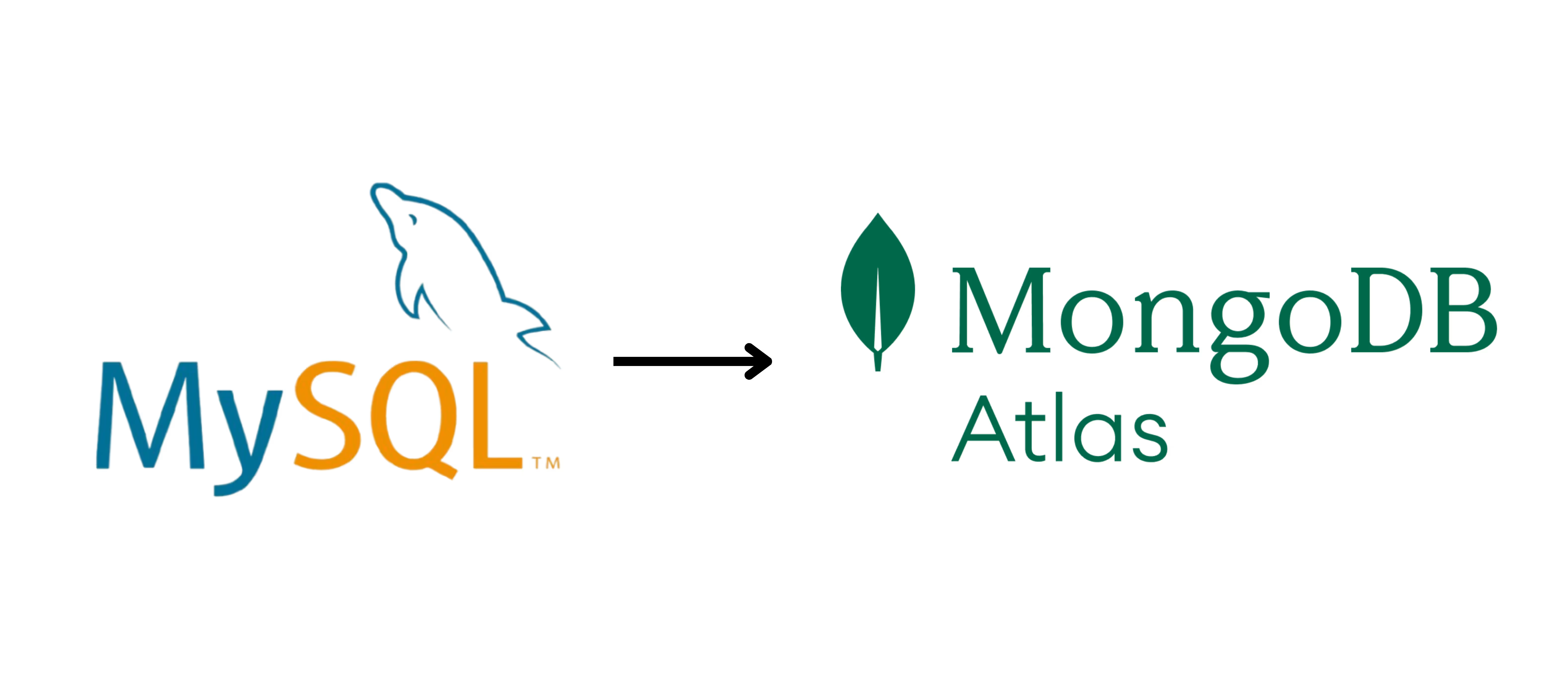
The decision to transition to MongoDB Atlas was a strategic turning point. It wasn't just about changing a database; it was about building an infrastructure that could breathe with the platform. While remapping relational tables to a flexible document structure presented early challenges, careful step-by-step planning and real-time data synchronization allowed the team to complete the transition without interrupting active users.
Today, the technical upgrade translates directly into business value. With database latency dropped from 200ms to just 10ms, Rooter’s players experience immediate, lag-free game-state updates. The platform now automatically scales to absorb sudden tournament traffic spikes, and developers deploy new features without database bottlenecks. By solving their database scaling challenges, Rooter has built a solid foundation to support their next phase of growth.
We help engineering teams set up, move, and manage MongoDB and MySQL databases so they stay online during traffic surges. Let's chat about your database scaling challenges.
Talk to a Database Expert Today!

.svg)


